Subscribe

Showing posts with label Things to See and Do. Show all posts

Maths in Museums: Roaring Meg at Goodrich Castle

In this post I explore how a Civil War mortar at Goodrich Castle illustrates mathematical ideas about angles and projectile motion - part of a broader “Maths in Museums” series.

Introduction: Roaring Meg at Goodrich Castle

A found some maths at Goodrich Castle: a ten-minute drive from the Welsh border in Herefordshire, England, it has to be one of my favourites[1]. It's a Norman medieval ruin (now looked after by English Heritage) that played host to an English Civil War siege by Parliamentary forces upon the Royalist forces stationed there. Despite not having its defences updated to 17th-century standards the medieval castle stood up well to direct attacks and artillery was introduced, with Parliamentary Army Colonel John Birch commissioning the casting of a Civil War mortar called Roaring Meg.

A short-barrelled cannon with a 390mm diameter rests in a wooden, wheel-less gun carriage. It is photographed here in its position on a tiled outside floor, with parts of ancient stone walls visible in the background.
Roaring Meg at Goodrich Castle © 2025 by Thomas K. Briggs is licensed under CC BY-NC-SA 4.0

Maths in Museums: Bolsover Castle

For years I have been periodically prompted to think "ah yes, must go there one day" by signs for Bolsover Castle as I pass through the vicinity of Junction 29A on the M1. That day, as all things must surely do, finally came to pass on Monday 11th August, 2025[1].

A picturesque view of a historic, partially ruined castle with stone walls and turret-like features. People are walking in the foreground, while others sit on benches, enjoying the scenery under a clear blue sky.
Bolsover Castle © 2025 by Tom Briggs is licensed under CC BY-NC-SA 4.0

As with all posts in the Maths in Museums series, it is not for me to tell you how or when to visit, how much it costs, or even much about the history of the site (though some will surely creep in). All of that can be left to English Heritage, who are its current custodians. Our purpose here is to uncover some of the opportunities for mathematical exploration that I spotted during my visit[2]. As with most museums and galleries, there's no interpretation at the site that will help you to structure any exploration of these ideas.

Maths in Museums: Stonehenge

On Saturday morning I crested a hill on the A303 just past Amesbury and my brain yelled something that I imagine a million and more brains, over thousands of years, have yelled before mine:

"What the hell is that!?"

It did this despite having made a special trip to the area to see that which caused the outburst, and it wasn't even the first time it had done so. As old as the pyramids (or thereabouts) and at once out of place yet totally fitting, Stonehenge is a phenomenal thing to see rising out of the Wiltshire countryside - even when you're expecting it.

The grey, mottled rocks of Stonehenge echo a lighter but equally mottled grey sky and contrast with the rolling green grass that they stand magnificently upon
A photograph of Stonehenge, taken by me, but looking for all the world like a cardboard cutout on a movie set.

I love museums and heritage sites of all shapes, sizes and themes, but Stonehenge has always commanded a particular fascination. I'm neither religious nor spiritual, but visiting always feels like something of a pilgrimage. I work with museums and I'm also a maths communicator, both of which affect the way I look at cultural experiences: this post is intended to document some of the thoughts I had regarding the potential of Stonehenge's story for enriching mathematical understanding (and vice-versa).

Stony Stratford: Things to See and Do

 If you're looking for things to do in Milton Keynes I've recently discovered* Sophie etc, a blog covering just that topic. It focuses on food (she's pointed me towards some GREAT takeaways during lockdown) but also posts now and then about other adventures that are up for grabs in the area.

There's a post (this one, in fact) about all of the fantastic things you can do in Stony Stratford, a gorgeous former market town up in the furthest reaches of north-west Milton Keynes.

Actually, she doesn't quite cover all of the things that are worth seeing, though the one I'm going to tell you about is a bit niche.

Musings on the Science Museum's Maths Gallery

I love the Science Museum and visit regularly. Mathematics: The Winton Gallery opened in December 2016 and I was lucky enough to visit very early on as part of the Christmaths event organised by the highly influential maths resources twit[1] Jo Morgan, and I've visited a small handful of times since, including yesterday.

Photo by T.Briggs 2019: The H.P. 39 "Gugnuc" biplane that forms the centerpiece of the exhibition, surrounded by wibbly representations of airflow patterns around the machine in flight


Things to Do in Leicestershire: Visit a T Rex!

In your mind, superimpose that spine-tingling T-Rex roar from Jurassic Park
Another joint photo-and-I've-done-something-interesting post! I'm including some of the photos below, but (as always) you can see more here.

I have lots of interests, but a good way to figure out what some of them are would be to grab a small boy and ask him what he finds interesting: space is a surefire hit, but so are dinosaurs, and that's the subject of today's Interesting Thing.

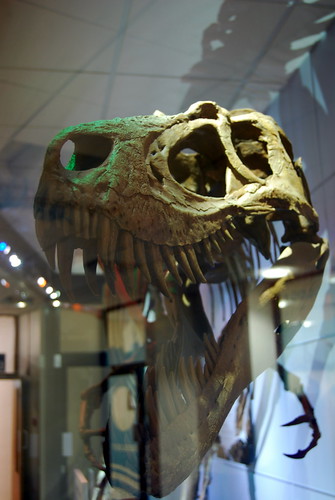
My friend Victoria is a seismologist*. She works in the Geology department at the University of Leicester, which has its very own pet Tyrannosaurus Rex**. They are actively encouraging schools to send groups of students to visit Jane (and to see some other things in the department- they have an extensive collection of rocks and fossils on show, including some meteorites!), but Victoria kindly arranged for myself and my other half, Emma, to come in and meet Jane without a gaggle of kids in tow. She was doubly-kind and arranged for us to meet Dr Jan Zalasiewicz***, senior lecturer in Palaeobiology, who knows all about Jane (as well as everything else dinosaur-related) who talked to us about her (and palaeobiology in general) and answered all of our questions.

Jane is a young adult T. Rex, standing 2.3m tall, and 6.4m long. Double these figures, and you'll get an idea what mummy and daddy were like.
To any teachers who are reading, I found Dr Jan to be knowledgeable without being overbearing: he obviously knows his stuff and is experienced and comfortable with passing it on to others, and not necessarily at the university level. He showed us one of the activities he does with younger kids (involving a very large rolled up sheet of paper with an ancient dino-wing drawn on it), which I can imagine working well with anybody, young or old, with a dino-geekery streak in them. To get in on the action, check out Jane's website and email schools liaison officer Dr Gawen Jenkin at geology@le.ac.uk to find out more.

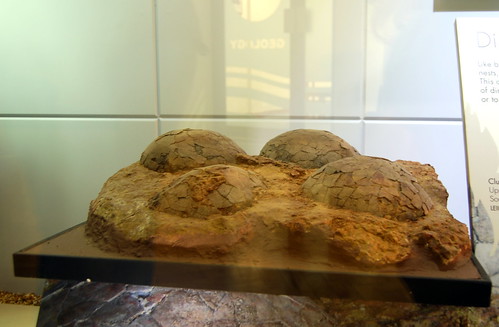
There are other fossils on display, arguably the most impressive of which are these well-preserved dinosaur eggs.
After we'd finished with the fossils, Victoria took us down to the room where the meat of her work - seismology - gets done. She works for the university and maintains the Natural Environment Research Council (NERC)'s seismic equipment pool (mostly seismometers, funnily enough), and part of her job involves testing the equipment when it is returned to the department.

These seismometers were being tested. Victoria showed us the readings they were given on a laptop they were connected to, and how they were effected just by jumping up and down near them. Earthquakes on the other side of the world have been detected by seismometers on test in this room!
We also headed down to Leicester's New Walk Museum and Art Gallery for a look, largely because they have a dinosaur exhibition on at the moment. This was pretty cool, but the museum doesn't allow photography, so that's a post for another day!

Part of the internal workings of a water-damaged seismometer.


* Yes, that has very little to do with dinosaurs, but keep with it.
** Unfortunately she's**** been dead for around 66 million years, but looking good for it, despite the lack of skin, flesh, internal organs, etc.
*** I recognised him, but my memory wasn't being very helpful until later in the day when I remembered seeing one of his lectures at the Space Science themed 2010 University of Leicester Homecoming. I blogged about that (and the other lectures) here.
**** Actually, they don't know whether Jane was male or female: sexing dinosaurs is tricky.
Ja(y)ne can be a boy's name too...

Things To Do in Buckinghamshire: The Hell-Fire Caves

On our way home from dog-sitting we popped in to the charming surroundings of West Wycombe to find out what the less-than-charmingly-but-excitingly named Hell-Fire Caves were all about. I took some photos, as you'll see below. If you'd like to see the rest, they're on flickr.

If you're travelling by car there are plenty of car parks nearby, but I'd suggest that you do what we did- head straight for the caves, but carry on until you get to the very top of the hill. There's a car park up there that's very unlikely to be full (some of the others are very small), and the route back down to the caves takes you past the interesting sights of the Church of St Lawrence, with its striking and unusual golden ball...
The Church of St Lawrebce, West Wycombe
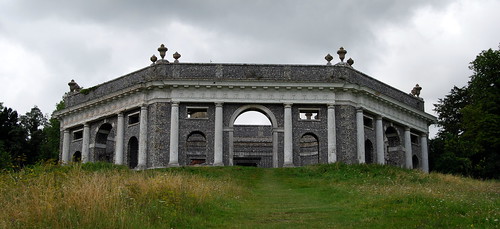
... and the Dashwood Mausoleum, backing on to the church's grounds. Both of these are relevant to the story of the Hell-Fire Caves and are easily missed if you park somewhere else.

The Dashwood Mausoleum, West Wycombe
Be warned, however, that the route down is quite steep and anyone who isn't particularly mobile will find it tough going.

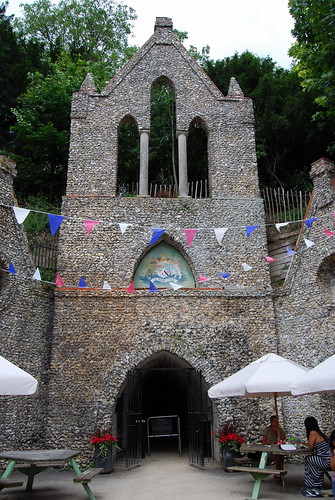
Outside the caves is a courtyard with shaded tables and a cafe/ gift shop from which you can buy food (I had the very tasty Hell-Fire club sandwich; Emma had a cheese & tomato toasted sarnie. We agreed that it was better than anything we could have spent the same amount on at a service station), a small but pleasing selection of relevant gifts, and, of course, tickets to the caves.

The entrance to the Hell-Fire Caves, made scarier by the inclusion of picnic tables.
The caves were hewn from the rock beneath the church and mausoleum by a local workforce who were on the verge of joblessness following a couple of bad harvests. Sir Francis Dashwood employed the locals to carve a series of caves from the chalk rocks which were used as a meeting (and party) venue for the notorious Hell-Fire club made from members of the 18th Century aristocracy.

Can you see the ghost in this image? Actually, it's Emma blundering in front of
my long- exposure photograph.
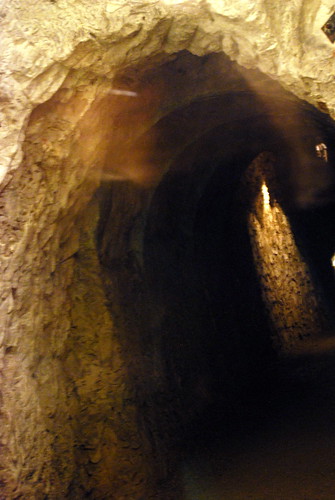
As you wander through the 1/4 mile of caves and passages, there are regularly placed information boards. Many of these could do with being rewritten, and some repeat information given on previous boards, but they do a decent job of telling the story of the Hell-Fire Caves regardless. The passages are dimly lit: well enough so that you don't bump your head too often, but not so bright as to destroy the air of mystery and history that floats through them.

Regular information boards give an insight as to what went on down here.
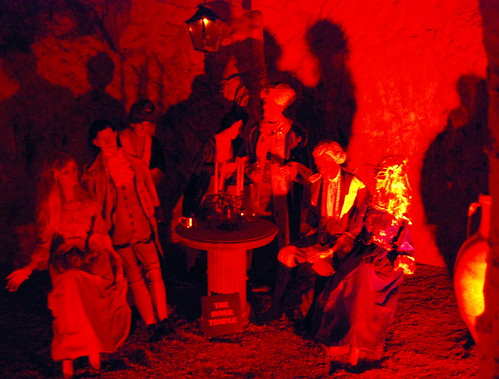
As well as the information boards there are also eerie tableaux set up here and there...
Each one of these frozen scenes gave me the willies.
... and they wait until you get a little deeper in before telling you about the two ghosts that are said to wander the passages.

Is it a ghost? No. It's something much more terrifying.
The photograph above shows the eerie spectre that is Emma getting in the way of one of my shots again. She's standing in one of the entrances to the main hall, which is even now available to be booked for private parties. How cool is that?

The caves were dug by hand from the chalk rocks of the West Wycombe hills
It's cold, dark and damp inside the caves, and we were dripped on more than once. There's also an underground river (with a familiar and entirely relevant name). You'll want to make sure you're wearing appropriate footwear because it can be slippery!

These models were scary. I've said that before, haven't I?
It cost us £5 each to get in, and we considered that money well spent for the experience. We were in the caves for an hour or so, so you might want to find other things to do if you're travelling any distance to get there: There's West Wycombe Park and the village to explore, and probably a good number of countryside walks to go on.

If you want more info, it's here:


Things To Do in Oxfordshire: Didcot Railway Centre

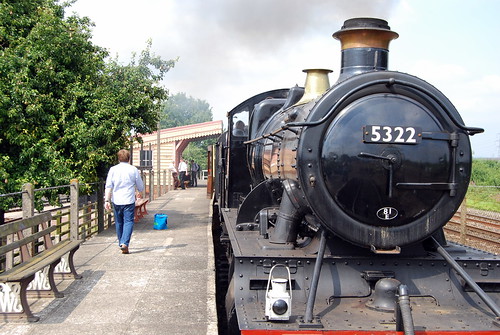
In contrast to yesterday's Living Rainforest trip, we skipped over the border (from Berkshire into Oxfordshire) and back in time to visit the Didcot Railway Centre. Entering the centre from Didcot's actual current railway station, you walk through the subway, a sort of time tunnel, which brings you out into an era of rail travel dominated by steam engines. There are a few photographs included below, but you can see the whole lot at flickr. There are some good'uns, I promise.

This train, on 'running days', will lug you up and down the museum's length as many times as you like.
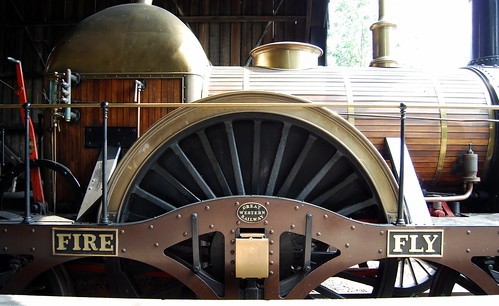
The Railway Centre is a museum, but not of the usual type: this one's a living, breathing museum of engineering masterpieces. By 'living' I don't mean there are people in period costumes wandering around pretending they're actually in the period you're learning about. Instead, this is an actual half-mile of railway with working locomotives hauling carriages up and down the track. The best bit is that riding in these carriages is included in your ticket price (which is about £8 for an adult).

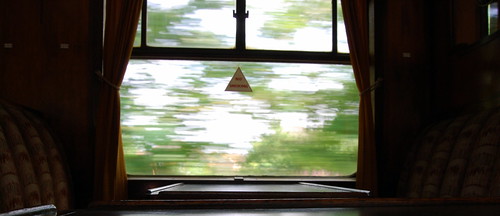
See the countryside flash past in more comfort than you'd find on a more modern train.
Upon arriving we jumped onto the train, which seemed the obvious thing to do, and we're taken to the other end of the museum, which featured an old station whose purpose was to transfer goods from standard gauge trains to Didcot's broad gauge vehicles.

Didcot's railway comes from a time before track widths were standardised.
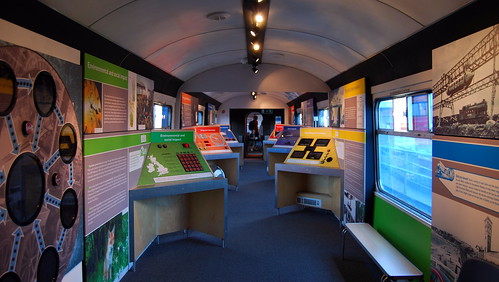
Wandering along the length of the track there are engine sheds, a shed in which old carriages are being repaired and restored, a turntable, a museum, shop, cafe, and other assorted attractions including an old air raid shelter and a railway carriage that has been converted into an educational centre primarily aimed at children, and focusing on the science of how steam engines work (this was made accessible by way of a series of interactive stations which really engaged me, and should therefore hold the appeal of many younglings).

Science! And trains! The science of trains! And I got an I. K. Brunel T-shirt. Awesome.
There are plenty of information boards dotted along the site, which is mostly open to the elements so bring a brolly if it's wet and sun cream if it's dry. You can walk or ride from station to station- it's not far, so not too hard on your feet, and you can ride the train as much as you like, so that's not hard on your wallet.

I include this not only for train fans, but also fans of a certain short-lived science fiction TV series.
At the end, we arrived back at the beginning (don't all the best stories?) and, as a quick plot-twist, jumped on the train again to experience one of the first class carriages up and down the track. It was a bit like what you might get if you put your grandparents' living room furniture in a booth on the Hogwarts Express.

You don't get upholstery like that in trains these days. Not even in first class.
Then we grabbed some dinner at the Prince of Wales pub across the road from the station (just in case you're worried about food- there wasn't a lot of choice at the Railway Centre's station cafe).
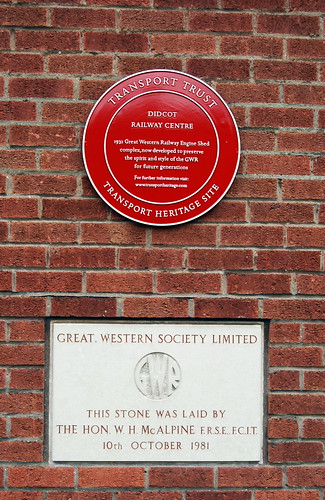
I snapped this mostly because this stone was laid exactly a year to the day
before I was hatched.
Coincidentally, it's also the same date that Alex Drake's parents were blown up.
If you want more info, here are some links:

Things To Do in Berkshire: The Living Rainforest

Rainforests are hard to get to. They're all inconveniently placed somewhere in Foreign, which means that for this midlander at least, it takes a bit of effort and a bit of cash to get anywhere near one. Having been talked into dog-sitting for my mum at her and her partner's place near Reading, Emma and I were looking for things to do nearby*, and we came across The Living Rainforest, which is in Hampstead Norreys, Berkshire, not far from the M4's junction 13.

Intriguingly, the main attraction of this place is that they bring the rainforest to you. It's essentially a great big hot, wet greenhouse in the middle of the Berkshire Nowhere that's full of trees, plants and animals that you just wouldn't usually come across on a normal wander through any British county. At least, in some cases, you hope you wouldn't.
Here are some fish (I can't remember what type... sorry!) There were also stingrays and turtles swimming around.
Before even purchasing our ticket we were pounced on by a man trying to sell us Wildlife Trust membership, which is about the only thing about the visit that I didnt like: let us get through the door first! It cost us just under £10 each to get in, and the ticket's valid for another 12 months so we can come back again next time we visit my mum. The mission of the charity that runs the Living Rainforest is to promote sustainable living, but this wasn't explicit, and I'd like to have seen more information available on this front.

You grab a map, wrestle your way through some flappy plastic hanging door things, and you're in the first hot and humid enclosure. There's lots of Rainforest foliage all around, but it's the animals that interest me the most: tanks of cockroaches, millipedes and other invertebrates; a chameleon and poison-dart frogs in another enclosure. And then we turned around to find a lizard looking at us, standing in the path that we just walked down! In fact, throughout the Living Rainforest there are a number of creatures that wander (or fly) about amongst the human visitors and seem very happy to have them there.

According to @Morphosaurus this is a Chinese water dragon, Latin name Physignathus cocincinus.
Through a second flappy-plastic airlock, and you're in the even hotter, even wetter 'Amazonica House', which contains more flora and an even more impressive array of fauna including tortoises, terrapins and turtles; monkeys and marmosets, a carpet python and a dwarf crocodile named Courtney (these are all safely contained, though there are a number of birds flying around like they own the place**). One of the employees gave a really interesting talk about Courtney, and I was only disappointed that such talks weren't publicised more effectively- we only found out about it because we happened to turn up as it started. There's also an aquarium containing a variety of fish, ducks, turtles and even stingrays all coexisting in a habitat that seems as natural as possible given that it's not in the Amazon and is surrounded by gawping hom-saps.

It's entirely likely that you'll want to take a break from the oppressively hot atmosphere inside the Living Rainforest (the 22 degree English summer that's too hot for my taste seemed relatively cool once we left). Thankfully there's a cafe and the obligatory gift shop. The cafe sells a limited but appropriate range of lunch-foods at a reasonable price (my baguette was tasty and rammed full of filling, easly justifying the ~£3.50 price tag). The gift shop was the usual affair - largely generic tat that pre-teen minds are always desperate to spend their pocket money on - which is a shame because I thought here were a few possibilities for more Living Rainforest specific items that would be both easy and cheap to produce and potentially very popular***.

This rotter stubbornly refused to look in my direction when I was trying to take a photo of it. I wish I hadn't left my DSLR at home- there were some amazing photo opportunities.
Other things that I feel I should mention include the possibility of taking part in feeding certain animals. This has to be booked in advance, and had a price tag of about £80 for most creatures, with profits going to the upkeep and development of the enclosures. There are also outdoor picnic and play areas. Photography is allowed as long as you don't use a flash: I wish I'd remembered to take my DSLR because there were some cracking photo opportunities, and some of the subjects may have deemed me worth looking at if I was using some equipment more decent than my phone.

Altogether, it's a great experience that I can see appealing to children and adults alike, though it's probably not going to fill up an entire day for you - we were out for about 2 1/2 hours.

Here's where to find more info:


* Emma was looking for things to do. I was probably watching a DVD, or reading, or blogging or something.
** Which, of course, they do.
*** If anyone from the Living Rainforest wants to get in touch I'm more than happy to detail some ideas and collaborate in their production if they think they'd work!

Things To Do in Buckinghamshire: The Roald Dahl Museum and Story Centre

Emma waiting patiently in the entrance for me to
stop taking photos. The gates that you can see if
you press your nose to the screen and squint are
recreations of the ones used in the Johnny Depp
retelling of Charlie & the Chocolate Factory: they
were offered the ones from the movie, but were
too big!
On a long-weekend dog-sitting for my mum while she was on holiday, we found a few things to pass our time. This was the first thing we did, en route to my mum's house near Reading. This is a combined photo post and review; you can see more pictures here.

In the picturesque village of Great Missenden, home of beloved children's author Roal Dahl for over thirty years, sits the Roald Dahl Museum and Story Telling Centre.

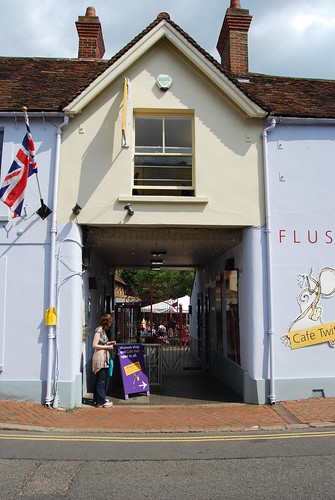
Upon arrival we went straight for lunch in Cafe Twit. Whilst not a cheap meal, it had a very home-made feel quality to it, and they weren't skimpy on the portions either. The whole experience was in keeping with the Roald Dahl theme, with favourites having their names twisted to sound like they could have come from one of his classic stories.

After lunch we headed into the museum proper. At £6 a head (for adults), it's not a bad entry fee, and we had it even better because we got one free on a Waterstones promotion. It's probably worth mentioning that Cafe Twit and the shop can be accessed without paying for entry.

Once entry is paid for you can wander around to your heart's content, and even leave the site and return later thanks to the wristbands that you're supplied with. Adults are given a visitor's guide, and children get a story ideas book to jot down notes and ideas as they go.

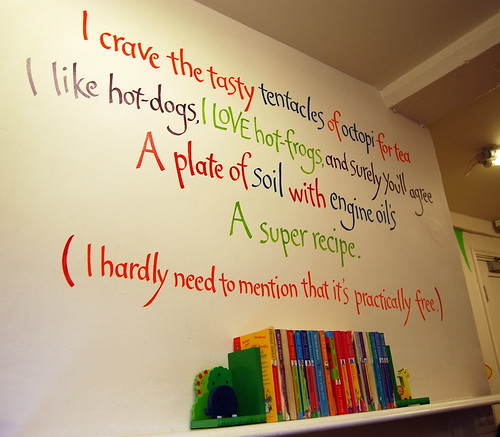
A quote on the wall in Cafe Twit. Do you know which book it's from? And can you spot the superfluous apostrophe...

There's plenty to do:
  • Two galleries outline Roald Dahl's life: one details his childhood and school years; the other takes you through his various experiences as an adult, including many of the events that inspired and shaped the stories that he wrote.
  • The story centre is an area full of inspiration and encouragement for budding young (and young-at-heart) storytellers. With activities to get the creative juices flowing; clothes to dress up in; excerpts from notes and early, unpublished versions of Dahl's stories; a craft room; and comments, both spoken and written, from other famous children's authors on how they write, anyone with a creative bent can run amok.
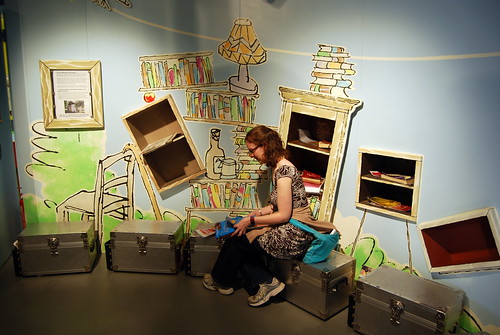
Emma gleaning inspiration from the master's notes in the story centre.
There's a fair amount of interactivity here, with extracts from his books and memoirs, and displays visually echoing the works of Quentin Blake, whose illustrations will, for me, forever be an integral part of Roald Dahl's mastery.

Whilst the museum is aimed at children between the ages of 6 and 12 I found myself, at 29, immersed in the experience of finding out about the creator of worlds that influenced my own early years. I found out that I'm exactly the same height as Farmer Boggis, whilst Emma is somewhere between Mrs Silver and a human-sized duck. An interactive quiz told me that I'm as sparky as Fantastic Mr Fox*, and I had a sit down in a faithful replica of Dahl's own loved and battered writing armchair. The staff at the museum are very friendly, approachable, and encouraging, regardless of how many digits there are in your age.
There's a feedback board that does nothing to detract from the playful atmosphere of the museum!
Aside from the static exhibitions, there are also other events from time-to-time: craft activities in the craft room, story-telling activities in the courtyard, and we listened to a short but interesting and informative talk about Roald Dahl's writing hut. Most comments that I've found state that their visit lasted 1 - 2 hours, but this would depend on how many of the extra activities you take part in, and on what day you go. I'd advise taking a peak at the calendar in the What's On section of the museum's website before you go so you can find out what extra activities are being laid on at the time of your visit.

Here are some places you can find info:


The sweet shop across the road from the museum is a great place to pick up some treats and gifts.

If you're looking to stay a little longer (it's quite far away from a lot of places**), then there are options to extend your visit:
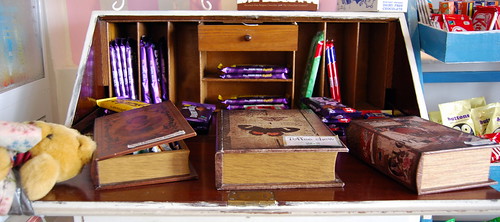
  • Across the road from the museum is a gorgeous little old-style sweet shop, selling sweets, pic & mix, ice cream, chocolate fudge and all sorts of other things that are good for your mind and bad for your body.
  • If it's a nice day, there are two self-guided walks you can follow: the village trail, and the countryside trail (hard copies are available at the museum).
  • Roald Dahl's garden is open on selected dates during the year.

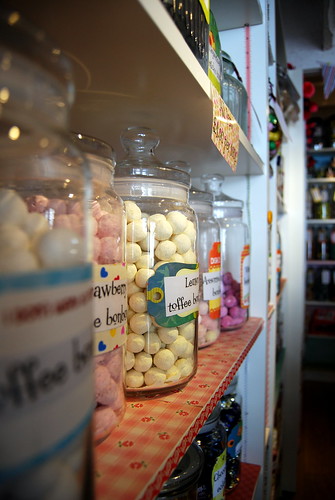
Sweets in jars: the sign of a good old-style sweet shop.


* I can live with that.
** So is everywhere, I suppose.

Things to do in Kettering - Bella Sicilia (Italian restaurant)

Arturo & his accordion (from the Facebook group)
From the outside Bella Sicilia doesn't look like much; it could almost be a basic take-away*, or even the reception for a small double-glazing firm, but walk through the main door and a surprising thing happens: you are transported to a little piece of Italy (or, rather, Sicily).

I don't know much about authenticity when it comes to Sicilian food and decorations, but this place certainly played up to my expectations- the decor is light and airy; basic yet inviting. The atmosphere when I arrived was immediately friendly and, although the tables (and therefore diners) are fairly closely packed it didn't feel claustrophobic.

Our drinks order was taken and menus provided shortly after we had been seated. Throughout the evening the service was fairly slow, but this was not a bad thing: we were in no hurry and there was certainly none of the feeling so often experienced in other venues that you're being herded in and out as quickly as possible. Maybe 'laid back' would be a better description than 'slow', with this in mind! My food was excellent, with both quality and quantity being high enough to leave me satisfied, and some of my companions enthusiastically expressed similar sentiments. The rest of the diners all appeared to be enjoying their food, of which there was (to me) an unusual and exotic array.

After we had finished eating, the owner of the establishment appeared with an accordion and a tambourine and skilfully played a variety of songs, including Happy Birthday, some Frank Sinatra numbers and what I assume were some traditional Italian/ Sicilian songs, with accompaniment provided by various diners on the latter instrument. After this entertainment, the restaurant's sound system played some Sicilian classics like Crazy Little Thing Called Love and Brown Eyed Girl until we left, after having paid around £230 between seven of us. This works out at about £33 each for two courses plus drinks - not cheap, but hardly bank-breaking either.

I was impressed with Bella Sicilia, and would not be upset at the thought of visiting again at some point in the future. It was a fun evening with great food and unexpected entertainment at a decent price. If you want to mark an occasion with something different, you could do a lot worse than Bella Sicilia.


* Bella Sicilia does offer a take-away service, but I haven't used it.

Things to do in Northamptonshire - AMEF presents... Strictly Culture and New Music Nite Weekender

First of all...
Street team needed!
The AMEF presents... Strictly Culture and New Music Nite Weekender event URGENTLY needs a street team to do the following:
  • Work as crew over the weekend
  • Distributing leaflets and fliers
  • Putting up posters
  • Spread the word!
Get in touch with Angela (landline 01933 352997, mobile 07739 507442, amef@hotmail.co.uk, or via myspace or facebook) if you're interested in taking part. Keep reading to find out more about the event!


AMEF presents ... Strictly Culture and New Music Nite Weekender - a weekend of music and arts 
What?
Two days of music and arts - this year's answer to the AMEF Music Festival.
When?
  • Saturday 17th October, 12 noon until 4 (AMEF presents... Strictly Culture) and then 7pm until midnight (AMEF presents... New Music Nite Weekender)
  • Sunday 18th October, 12 noon until 4 (AMEF presents... Strictly Culture) and then 6pm until 10pm (AMEF presents... New Music Nite Weekender)
Where?
The Pemberton Centre, H.E. Bates Way, Rushden, Northamptonshire NN10 9YP
More details about the weekend
Saturday October 17th 2009
  • Strictly Culture (12 noon - 4pm):
Events for the whole family to enjoy, including dance and orchestral performances as well as some workshops to get involved with, such as street dance and art workshops. There will be stalls set up so that you can find out more about what's going on in East Northamptonshire, as well as a bouncy castle and more! On Saturday only there will also be an ice-skating rink!
  • New Music Night Weekender (7pm - midnight):
Just like the New Music Nites, only better! A series of live bands play sets of original music. In between the bands there will be a disco, and food and drink will be available. There will also be a video feedback booth for you to leave your opinions!


Sunday October 18th 2009
  • Strictly Culture (12 noon - 4pm):
Similar family-oriented events and performances as on Saturday, but without the skating rink.
  • New Music Night Weekender (7pm - midnight):
Sunday night's New Music Nite will be more disco oriented, with some drum 'n' bass, hip hop, break beats, as well as some local bands, and maybe a cover or two!
Prices
Strictly Culture:
  •  £3 per day, or get a two-day ticket for only £5
  • Free parking 
  • Under 4s are free
  • Parents come free with at least one paying child (aged 4 - 17)
  • Get your tickets at www.wegottickets.com/f/1089 or from the Pemberton Centre Reception.
 New Music Nite Weekender:
  •  £5 per nite, or get a two-night ticket for only £8
  • Free parking
  • Remember your I.D if you're over 18!
  • Get your tickets at www.wegottickets.com/f/1088 or from the Pemberton Centre Reception.
More information

Things to do in Northamptonshire - Open Studios

Starting in June each year, the Open Studios Northamptonshire project start printing and distributing brochures about the event. Over the next four months, more than twenty thousand brochures are given out in Northamptonshire and the surrounding counties of Warwickshire, Cambridgeshire, Leicestershire, Rutland, Bedfordshire, Buckinghamshire, Oxfordshire and Lincolnshire.


What is it?
During the first two weeks of September every year (since 1996), shedloads of Northamptonshire artists open up their studios to the general public as part of the Open Studios Northamptonshire event. Every type, format, medium and style is covered by a variety of artists, from abstract acrylic through pop art painting and stylised sculpture and on to clay work, ceramics and textiles.

Many of the artists have works available for purchase, and some will accept commissions. A number are just displaying work they have done in the past, and a few will probably be working on something while you're there.


Where is it?
All over the place. The Open Studios brochure includes numbered listings of all exhibiting artists, including addresses and other contact details, and brief descriptions of their work (usually with a photograph or scan). The numbers are referenced on a map (usually located on the centre pages for easy location) which covers a fairly wide area - on the edge of 2009's map are Milton Keynes, Brackley, Banbury, Rugby, Market Harborough, Uppingham, Oundle and Bedford.

The exhibitions are in all sorts of different places, many clustered in towns, but with a worthwhile number out in all sorts of village locations that you've never heard of. The venues are equally diverse: your first visit may be to a funded art gallery, while the next is in somebody's garage or shed, and the one after that in a communally rented studio space. There are also exhibitions in various pubs and cafés throughout the county, as well as artworks on display in some of our halls and stately homes.


When is it?
Each of the brochure's individual artist listings include a calendar indicating on which days over the Open Studios fortnight (the first two weeks in September each year) they are exhibiting, and at what times.


Any tips?
A lot of artists participate in Open Studios. So many that it's not feasible to get round them all in one day, or even a weekend. With this in mind, the brochure is useful for planning your visits- have a flick through, circle the ones that snag your imagination, and then see where they are on the map.

Depending on who you are and your motivations for visiting artists, you may want to see if you can split your chosen artists into groups based on location- one clump for Saturday, one clump for Monday, etc.


Anything else?

Devising your own Open Studios 'tour' can provide an opportunity to see bits of Northamptonshire (and just over the boundaries of other nearby counties) that you didn't even know where there. In past years, we've come across lovely cafés tucked away in remote corners that we wouldn't otherwise have had reason to visit, and discovered views of the local countryside that take your breath away.

For the artistic, it's an excellent opportunity to go and see what everyone else is doing, pick up hints, tips and inspiration, and to chat to other people in your field.

For the more inquisitive people out there, it's a great opportunity to have a nose around other people's houses and gardens!


More information
If there are any Open Studios Northamptonshire exhibiting artists out there who read this, I'm more than happy to include a link here to your websites; just get in touch!

Things to do in Northamptonshire - Peterborough Beer Festival

O.k, O.k, Peterborough Beer Festival is in Peterborough and not Northamptonshire, but this series is about finding things to do that are accessible by people in Northamptonshire, rather than strictly things that are in Northamptonshire. Peterborough is less than an hour's drive away from Kettering by car.

We were invited to join a couple of friends who live in Wittering on their trip to the beer festival, and I'm glad we did. First, a bit of background:


Peterborough Beer Festival
The Peterborough beer festival is an annual event, and this year (2009) marks it's 32nd since it began. This year, it's being held from Tuesday 25th to Saturday 29th August, and it is held during the same week each year. It is a CAMRA festival, so you know that real ale is the focus of the day and that it's likely to be a well organised occasion.

Where is it?
The festival is held each year on a large patch of grassy ground on the river embankment in Peterborough. The site comprises a number of enormous marquees, in which the beer, cider, perry and entertainment stage are located, and a number of food stalls around the outside of the enclosed area. There's a car park about two minute's walk away, and it's not much further from the railway, coach and bus stations.


How does it work?
Once you gain entrance to the site, you enter the first marquee where you can grab a programme and purchase (or rent) your beer glass (you can choose between a pint or 1/2 pint* glass). This cost us £3 for each glass, and you can either keep it as a souvenir or take it back for a refund. Anyone who's attended a CAMRA beer festival will know that the glasses are good quality with a unique design on the front and are therefore highly collectible. I would guess that the majority of people keep theirs, rather than claiming the refund.


What does it cost?
Entrance fees:
It depends on when you go, but if you pick the right day and time, it's free. Other times it can cost either £1, £4 or £5 depending on things like whether it's a peak time for beer hunters and whether you're a CAMRA member.
The glass:
It cost us £3 each for a glass. I think this is about standard at most CAMRA beer festivals from year to year.
The beers:
Most of the beers were under £3 a pint (or £1.50 for half), with an estimated average of around £2.60 per pint. Quite reasonable when you consider that many pubs are now selling their ales at a bit over the £3 mark.


Is it just beer?
No. There are ciders and perries** as well, and also a large selection of foreign beers. For the non-alcoholics or designated drivers there are stands selling things like lemonade, J2O, Coke and water, but I noticed that the cider and perry area also sold non-alcoholic apple and pear juices too, which are well worth trying if you like a truly fruit-based drink.


What about food?
Any seasoned ale drinker will know that, while it's nice to taste beer after beer after beer, all afternoon/evening/both without something to mop up the alcohol can leave you feeling decidedly unwell. Rest assured, then, that there are plenty of opportunities for food. These start with your typical burger and doughnut vans for those of you who like your food to be familiar. For the more daring, there was a seafood takeaway stand as well as a stand providing such fayre as crocodile steaks and springbok burgers. Inside the marquees there were more specialised food stalls, including one specialising in olives and roasted nuts, and also one selling pork pies and scotch eggs (locally produced, as big as your fist and in a variety of different flavours- I had a pork and apple one; delicious).


Beer all day sounds a bit boring. Is there nothing else?

There's much more than just beer and food. Off the top of my head, the other things I noticed included:
  • T-shirt stands
  • Classic pub game competitions
  • A general knowledge quiz in teams over the loudspeaker system (basically a pub quiz)
  • A number of fairground-style rides for the kids (and some adults)
  • On-site toilets (not really 'something to do,' but I just thought of it)
  • A stage on which a number of live bands perform during the evenings
  • Pub/beer memorabilia stands (old ad posters, beer mats, bar towels, glasses etc)
  • Plenty of room to sit on the grass and chat

Anything else?

At the time and date we went, the atmosphere was superb. It was genuinely and consistently friendly, the staff behind the stands (most of whom are volunteers) were cheerful and helpful, and the punters (us included) were a cross-section of British life. I saw no fights break out, nor was there any undue or offensive rowdiness. I put this down to the fact that there is absolutely none of the weak, tasteless lager*** (Carling, Fosters, Carlsberg, Budweiser and the like) that seems to attract those who can't hold their alcohol and turn into raving, feral creatures at the merest sniff. Not one kebab was thrown at anybody while I was there, which is more than I can say for an evening out in Kettering town centre.

We're already planning next year's trip- we'll be going on the Friday night and the Saturday, and we'll be taking:
  • More people
  • Some collapsible chairs
  • A picnic blanket
  • A game of twister
My only regret for the 2009 Peterborough beer festival is not being able to stay longer; some decent live music would have been an excellent accompaniment to the beer and food.


More information:


* Half pint? At a beer festival? Well, yes, actually. A beer festival is one of the only places you can get away with half pints as there are so many beers to try, having them in half pint measures allows you to make the most of the occasion without falling over too early on.
** The 'proper' name for a 'pear cider'. There's no such thing as cider made from pears.
*** My friend told me of an experience in a previous year in which a bunch of town-centre revellers turned up, spent a short while searching for exactly such drinks, finding none, complaining about that fact and then leaving. I don't believe that they threw any kebabs at anything during their stay, which illustrates exactly how short it was. Why anybody would turn up to a beer festival and expect to find a can of Carling on site is beyond my wit to comprehend.


Things to do in Northamptonshire - Arts Fresco

This is a review I wrote after the 2008 Arts Fresco in Market Harborough, slightly edited for this blog. I might update or re-review if we make it to this year's Arts Fresco event! As with some of my 'Things to do in Northamptonshire' posts, this event isn't actually in Northamptonshire, but it's within fairly easy reach (20 minutes or so's drive from Kettering). Market Harborough is in Leicestershire, very close to the Northamptonshire border. Anyway, here's last year's review:


Arts Fresco
The seventh annual Arts Fresco in Market Harborough was billed as 'an extraordinarily fun celebration of innovative street arts and spectacular entertainment,' and promised 'the best street artists from around the world.' I was interested to see whether the mental image conjured by the phrase 'street artists' – that of poorly made-up clowns juggling (I hate clowns, and hate juggling) in the midst of talent-deficient buskers with signs asking for donations of cat food – could be dispelled and replaced with something more rewarding.

When we arrived a little past midday everything was in full swing and the small market town was already buzzing with activity and atmosphere. Our route into the town centre took us past the Joules clothing store, a major sponsor of the event and host of the Traditional Seaside. A large sand pit in which a host of youngsters (and not a small number of oldsters) were hard at work with buckets and spades sat next to a man with green/blue hair and a boat on his head and a collection of deck chairs facing a stand which played host to some traditional performances by Punch and Judy, recreating a scene from a 1950s postcard.
Wandering on from surely the country's furthest inland seaside resort, we I came across some people with very strange hair, and Fairly Fresh Fish – a pair of cheeky-chappy East-ender fishmongers encouraging young and old to pet their dancing prawns and converse with a gooey eel emerging from its jelly jar.
Spying a conspicuously parked caravan a short way on, we went to investigate. It turned out to be a mobile exhibition displaying snapshots of British life with a slice of humour, a dollop of irony and a light dusting of satire. There was also somebody with an exceedingly odd hairdo.

Working our way past a small collection of craft stalls (and more people with odd hair) we came across a crowd of people. Politely squeezing our way through to a decent viewing position, we finally found out where all the strange hairstyles of the day were coming from: Osadia. These wildly dressed (and blue-skinned) Barcelonians were inviting audience members onto their stage and turning fairly normal hairstyles (in most cases) into extraordinary, one-off and, frankly, bonkers works of art.

Other artists worthy of mention include the fantastic Oxbridge undergrads Artizani punting (yes; that's the boat-and-big-stick method of travel) down the high street; fantastically charismatic and talented Goronwy Thom (who has turned my view of jugglers on its head); a pair of enormous seagulls terrorising anyone with a bag of chips; Jon Hicks, who produced a stunning pair of larger than life portraits of Freddie Mercury and Elvis Presley before our eyes; and Circus Box, the all-day circus school for children of all ages.

If you haven't been convinced by my review so far, let me add that the day's entertainment was absolutely free (apart from the pizza for lunch and the obligatory ice cream), and there wasn't a burger van or glow-in-the-dark-paraphernalia-salesperson in sight: this was all about art. All in all, it was a packed and enjoyable day out. We didn't leave until after the roads had re-opened and the street artists were packing away, yet we still hadn't seen everything. I'd encourage anyone who may be even remotely interested in this kind of event to keep an eye open for next year's Market Harborough Arts Fresco and put the date in their diary as soon as it is announced*!


More info


* Sunday 13th September 2009, 12am - 5pm

Things to do in Northamptonshire - Wistow Maize Maze

O.k, Wistow Maize Maze isn't in Northamptonshire. It's in Leicestershire, just a bit further on than Market Harborough if you're going up the A6, then turn off at Kibworth. It's within easy reach of North Northamptonshire (took us 20 - 25 minutes to get there), which is within the scope of these parts of my blog, as far as I'm concerned.


So what is it?
Wistow Maize Maze is a maze in Wistow that's made out of maize. And yes, it is pretty amazing. It's only around for 8 weeks every summer, and each year it is redesigned- this year the maize, from above, looks like a polar bear. Last year it was an Egyptian Pharaoh. The year before it was a witch on a broomstick.
#Edited to add: This year, it is/was a Spitfire aeroplane! Mmmrreeeeoowwww!

Each year the maze consists of around 3 miles of paths, hidden amongst which are 10 themed Quiz Trail boards, each with a different symbol. The idea is to collect the symbols and then head for the 'goal' area where there is a board that helps you to convert each symbol into a letter. Rearrange the letters and you have a message. Successfully decode the message and you can enter it on your entry card and deposit it in the box in the ticket office for a chance to win a prize.

There are also numbered boards at regular points within the maze. These boards are marked on the map you are provided with so that you can work out where you are if you get lost.

The maze itself is an impressive construction, designed each year using specialised maize-maze designing software and then converted into GPS coordinates which are then marked out on the ground by way of 1600 flags. The paths are cleared using hand sprays, and the rest of the crops are left to grow. By the time the maze is opened to the public, most of the maize is above head height. In October the maize is harvested and used to produce cattle feed.

There is also an 'activity funyard' outside the maze which includes activities for children including mini mazes and other activities including bean-bag throwing, hoopla, and football shooting.


Who's it for?
It's a great day out for any age- I went with Emma, and saw all sorts of people there: groups of teenagers; young families; older families; extended families; young couples; old couples; everything in between. Thought has been made about providing for wheelchairs and pushchairs, and such vehicles shouldn't have too much difficulty navigating the maze unless the weather's bad, although there may be some difficulties at points if you come across people coming the other way!

It's a worthwhile day out, in my opinion, for a number of reasons:
  • With three miles of paths to cover, it's a bit of exercise
  • It's a day out in the countryside
  • It has great educational potential for kids: the quiz boards provide talking points on a theme (this year it was about what we can do to lessen our impact on the environment), and it's a decent exercise of anybody's problem solving skills unless your tactic for finding the quiz boards is to wander aimlessly until they present themselves.


How much is it and when is it open?
Ticket prices (correct for 2009; check the Wistow Maze website):
  • Adults: £5.50
  • Children: £4.50 (13 & under)
  • Family ticket: £18.00 (2 adults, 2 children OR 1 adult, 3 children)
Parking is free at the rural centre on the other side of the road from the maze, and ticket prices include use of the Activity Funyard as well as access to the maze. You also get a map of the maze and a competition entry card.


Opening times(correct for 2009; check the Wistow Maze website):
The maze is available from early/mid July until late September. The following times are for 2009:
  • Sat. 18th July - Sun. 6th September: Open 7 days per week. Admissions: 10am - 4:30pm (maze closes at 6pm)
  • Mon. 7th September - Sun. 27th September: Open weekends only. Admissions 10am - 4:30pm (maze closes at 6pm)


Is there anything else to do there?
The maze itself took us around an hour to complete, without a break. We didn't spend any time in the activity funyard as we don't have children, so the venue may be a bit far for some people to travel to for the sake of an hour's entertainment. As I've already mentioned, free parking is available at Wistow Rural centre, the entrance to which is immediately opposite the entrance to the maze. The rural centre is worth a visit even if you've just come for the maze, but also adds something to the experience for those of you who may need to travel further to get there. Some of the things available at Wistow Rural Centre are:
  • Free parking (as already mentioned. Twice.)
  • Toilets (necessary information, as Wistow is in the middle of nowhere).
  • A cafe (decent enough food, as I recall, but with prices that you'd expect from a venue situated in the middle of nowhere).
  • A farm shop (nice looking produce, but with prices that you'd expect from a farm shop).
  • A couple of other shops, including a garden centre, a fish shop (as in pets and garden, rather than battered and fried), a pine and hardwood furniture shop, a contemporary arts shop, a jewellery and hangbags shop and a gift shop.
  • A model village (I was actually quite disappointed in this- it looks like it used to be fairly impressive, but has been left to rot. It's not very well tended, and appears to have been vandalised a bit.)
    #Edited to add: The model village is now undergoing what is stated to be an extensive period of restoration. About time! Here are a couple of pictures I took yesterday: The Model Village at Wistow and More of the Model Village!
  • Friendly ducks.


How do I get there?
It's signposted off the A6 at Kibworth Harcourt.
Here's Wistow maze on google maps
And here's the Wistow Maze website's 'how to find us' section.


Anything else I should know?
  • The maze ticket office takes cash and cheques only. The nearest cashpoint is in Fleckney, which is about 2 1/2 miles away.
  • The maze paths are uneven and potentially muddy, so wear appropriate clothing.
  • Dogs aren't allowed in the maze or activity funyard (there are plenty of fields nearby, though).

Sounds interesting, but I don't live near enough! Are there any more?
Yep. Check out these links for details of maize mazes in the UK and abroad:

Do you like what you're reading?

If you think I'm doing a good job, buy me a coffee and tell me what you want to see more of:

Popular Posts

My Blog List

Blog Archive

Creative Commons Licencing Information

Tom⇒maths by T. Briggs is licensed under CC BY-NC-SA 4.0 by-nc-sa