Subscribe

Things to Do in Leicestershire: Visit a T Rex!

In your mind, superimpose that spine-tingling T-Rex roar from Jurassic Park. 
Another joint photo-and-I've-done-something-interesting post! I'm including some of the photos below, but (as always) you can see more here.

I have lots of interests, but a good way to figure out what some of them are would be to grab a small boy and ask him what he finds interesting: space is a surefire hit, but so are dinosaurs, and that's the subject of today's Interesting Thing.

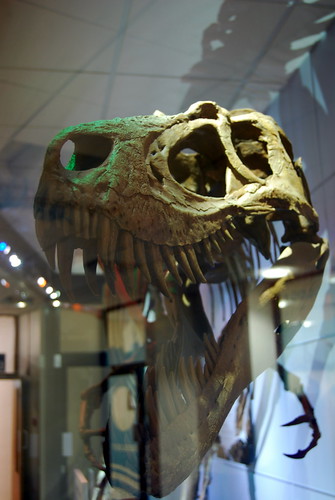
My friend Victoria is a seismologist*. She works in the Geology department at the University of Leicester, which has its very own pet Tyrannosaurus Rex**. They are actively encouraging schools to send groups of students to visit Jane (and to see some other things in the department- they have an extensive collection of rocks and fossils on show, including some meteorites!), but Victoria kindly arranged for myself and my other half, Emma, to come in and meet Jane without a gaggle of kids in tow. She was doubly-kind and arranged for us to meet Dr Jan Zalasiewicz***, senior lecturer in Palaeobiology, who knows all about Jane (as well as everything else dinosaur-related) who talked to us about her (and palaeobiology in general) and answered all of our questions.

Jane is a young adult T. Rex, standing 2.3m tall, and 6.4m long. Double these figures, and you'll get an idea what mummy and daddy were like.
To any teachers who are reading, I found Dr Jan to be knowledgeable without being overbearing: he obviously knows his stuff and is experienced and comfortable with passing it on to others, and not necessarily at the university level. He showed us one of the activities he does with younger kids (involving a very large rolled up sheet of paper with an ancient dino-wing drawn on it), which I can imagine working well with anybody, young or old, with a dino-geekery streak in them. To get in on the action, check out Jane's website and email schools liaison officer Dr Gawen Jenkin at geology@le.ac.uk to find out more.

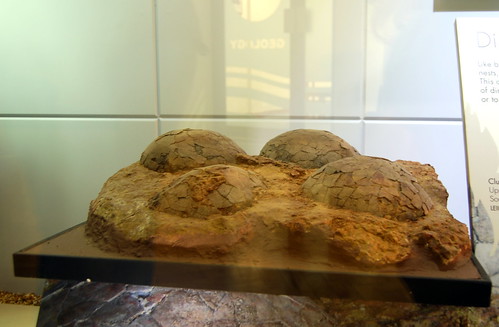
There are other fossils on display, arguably the most impressive of which are these well-preserved dinosaur eggs.
After we'd finished with the fossils, Victoria took us down to the room where the meat of her work - seismology - gets done. She works for the university and maintains the Natural Environment Research Council (NERC)'s seismic equipment pool (mostly seismometers, funnily enough), and part of her job involves testing the equipment when it is returned to the department.

These seismometers were being tested. Victoria showed us the readings they were given on a laptop they were connected to, and how they were effected just by jumping up and down near them. Earthquakes on the other side of the world have been detected by seismometers on test in this room!
We also headed down to Leicester's New Walk Museum and Art Gallery for a look, largely because they have a dinosaur exhibition on at the moment. This was pretty cool, but the museum doesn't allow photography, so that's a post for another day!

Part of the internal workings of a water-damaged seismometer.


* Yes, that has very little to do with dinosaurs, but keep with it.
** Unfortunately she's**** been dead for around 66 million years, but looking good for it, despite the lack of skin, flesh, internal organs, etc.
*** I recognised him, but my memory wasn't being very helpful until later in the day when I remembered seeing one of his lectures at the Space Science themed 2010 University of Leicester Homecoming. I blogged about that (and the other lectures) here.
**** Actually, they don't know whether Jane was male or female: sexing dinosaurs is tricky.
Ja(y)ne can be a boy's name too...

Photography: A Sunday Walk

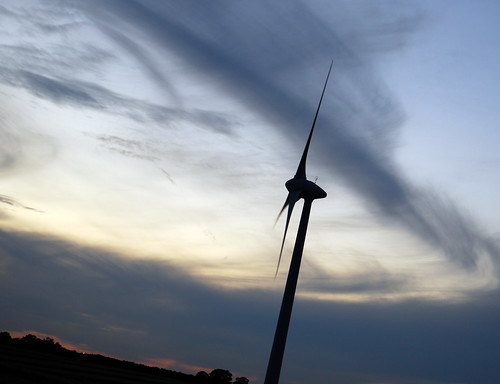
I've been on a Sunday evening walk and I took my camera with me, so here's a motley assortment of dusky photographs. As always, comments, suggestions, (constructive) criticisms are all most welcome. There are a couple more images here.

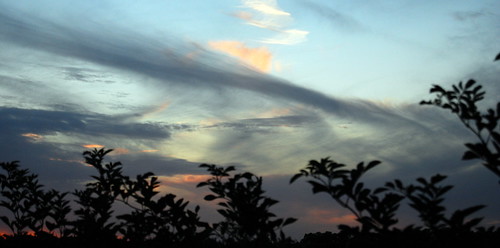
Sunset. Or, rather, sky-effects round about sunset timeish.

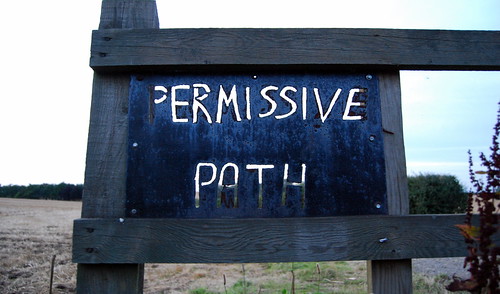
Part of me wants to find out just where this path's limits lie - we all have them, after all.

Most of the arguments against these things are complete rubbish.

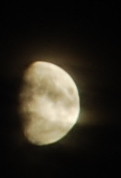
I'm still getting to grips with Moon shots. An altogether zoomier lens is definitely something I want to get my hands on: this is a heavily cropped shop. It was quite misty up there tonight, and I'm not totally dissatisfied with this shot, I'm just not sure how to get more contrasty Moon images.

It always surprises me how fast a shutter speed is needed to get a detailed image of the Moon, but I'm not sure why it surprises me. Also, taking my tripod out may well help- this was stabilised on the rail of a roadbridge.


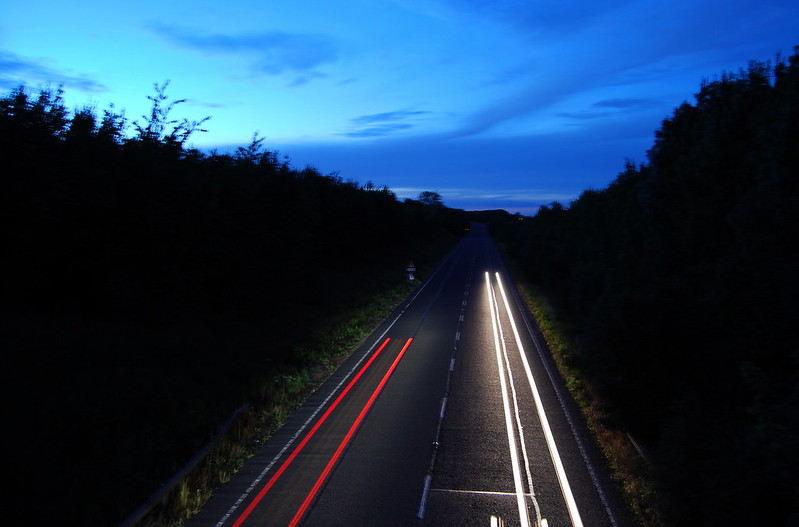
These two cars both hit 88mph at about the same time. What are the chances?

This is probably my favourite image of the night.
I just missed a police car with its flashing blue lights, which would have looked fantastic...

Must See TV: Wakey Wakey, Drakey

I don't watch a lot of telly, but now and then something catches my attention and I make a good effort to see what it's all about. Slightly less often, I get hooked so much that I have to see it through to the end, and rarer still is the situation in which I find myself wanting the DVD box set on my shelf.

Series 3 of Ashes to Ashes is the best eight hours of television I've seen in a long time. It has drama, conflict, action, emotion and light relief all playing about a backbone of perfect comic timing and slick dialogue accompanied by a brilliant soundtrack. There's a catch, though.

Here it is: If you're going to get out of these eight hours the entertainment and enjoyment I have, you've got to see series 1 and 2 first. But more than that, you really need to kick it off with Life on Mars. That's no chore, though- all four of those series are brilliant, and I'm choosing the final series because it really is the high that more television drama should aspire to end on. Here is, without spoilers, what you're missing:


Life on Mars, series 1

It's 2006 and Detective Chief Inspector Sam Tyler is investigating the kidnapping of his colleague and girlfriend and, in the process, is hit by a car and knocked unconscious.

He wakes up to find he's swapped his sharp suit for a leather jacket, loud shirt and cuban heels. Storming into CID, he finds that, somehow, it's 1973, he's now a Detective Inspector working under loud-mouthed, sharp-tongued, uncouth, consistently drunk and violent DCI Gene Hunt, and alongside Hunt's team, primarily consisting of DC Chris Skelton, DS Ray Carling and WPC Annie Cartwright. Sam's methods are as alien to the team as theirs are to him, and he works hard to gain their trust whilst hearing snippets from the future on TV and radio sets.

The series deals with the relationship between Sam and Gene, with each learning from the other's wildly different style of policing. They develop a grudging respect for one another as Sam tries to answer the question "am I mad, in a coma, or back in time?" Accompanied by a cracking soundtrack of contemporary popular music, he fights to find a way back to his own time and uncovers a dark secret from his own past.


Life on Mars, series 2

Sam's still in '73, still wearing the cuban heels. and still strutting along to a fab soundtrack trying to find his way home. Gene's still quick-talking, speedy with a punch to the gut and driving too fast. Solving crimes, beating up nonces and fighting with each other as much as the criminals they're trying to catch, Sam and Gene, along with Chris, Ray and Annie, head towards an emotional climax that threatens to tear Hunt's team apart. This is the price for getting Sam home.

Still hearing voices through TV sets and radios, Sam find things out that turn his world upside down and leave him questioning if his memories are real. The ending to this series was excellent- totally unexpected, with some of our questions being answered, some being left hanging, and a truckload more being dumped in front of us.


Ashes to Ashes, series 1

It's now 2008, and Alex Drake, who has been studying Sam Tyler's report of his experiences in 1973*, is called to an incident. She's shot in the head and wakes up in 1981, quickly finding herself in the company of Ray Carling, Chris Skelton and Gene Hunt, who have been transferred from Manchester to London. Having similar experiences to Sam, Alex hears messages from the future and her fight to get home is even more desperate than Sam's as she needs to make it home for the sake of her daughter, Molly. WPC Shaz Granger is introduced as part of the team, a young woman doing her best in the overtly sexist 80s environment.

In parallel to Sam's story (there are many), Alex's journey intertwines with her own past, answering questions that she had forgotten needed answering.


Ashes to Ashes, series 2

1982 (that's the year I was born!) and the gloriously retro 80s soundtrack continues unabashed, as does Alex and Gene's love-hate relationship. Is Gene there to help Alex, or to hinder her? Should she work with him or against him? This series explores issues of police corruption as well as digging deeper into the murky depths regarding the nature of the place that Alex finds herself in, and that Sam Tyler inhabited a couple of years before.

We see the characters of Chris, Ray and Shaz developing further, with another series ender that needs to be seen to be believed: Alex goes home! Or does she?


Ashes to Ashes, series 3

It's now 1983, and here's the meat and two veg of the entire franchise. Five series of Gene Hunt come to a head with slimy bastard Jim Keats mixing things up for the team. Allegiances are brought into question, friendships are tested to their limits. Things really hot-up towards the end of the series as all of our questions are answered, and Chris, Ray and Shaz learn as much about themselves as we do. The finale is an explosion of emotions as we, along with Alex, find out, once and for all, what's really been going on for the last five series.


Forty hours of television, all watchable stories in their own right, but working together to make one of the most original and compelling tales that I've ever found myself drawn into. It's one of those series that has you hooked from the start, enjoying the episodes and trying to second-guess the writers' intentions with regards to the overarching themes - but failing. Once it's over you'll feel a sense of loss but also of completion - they did a brave thing, finishing before it got stale. The revelations will be running through your mind for days, and you'll eventually go back and re-watch it, and spot all the clues you missed the first time around.

And then, if you've got any manners, you'll come back here and thank me.


* This really isn't as much of a spoiler as it sounds. You'll have to watch Life on Mars to find out why.


Anne of Greengages

This is a bit of an experiment wherein I just waffle a bit and see where my thoughts take me. Let me know what you think, either way.

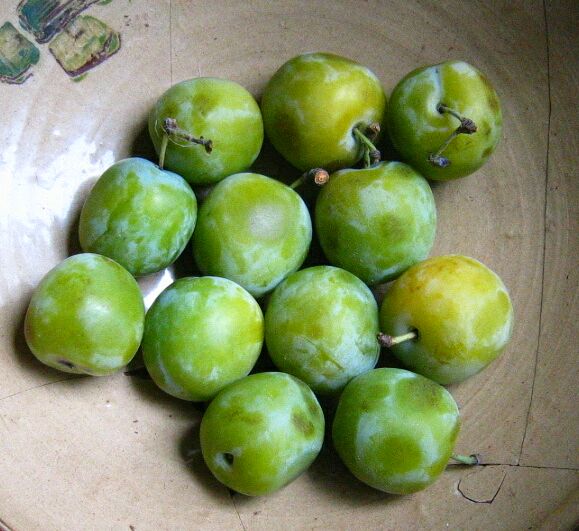
Emma just came home with some greengages. They are a fruit that I haven't encountered much. They are rather like a small, green plum. Apparently the first 'true' greengage was bred in France.

Anne of Green Gables is a novel written in the early twentieth century by Lucy Maud Montgomery, in which young orphan Anne Shirley gets sent to live with a middle-aged brother and sister at Green Gables, a farmhouse on Prince Edward Island. They wanted a boy. When I was at university, living in university accommodation (academic year 2001 - 2002), my friend Rachel* made us watch a television adaptation of this book. There have been many adaptations, but I believe this one to have been the 1985 version. I remember us laughing quite a lot at unintentional innuendo, and at the fact that Rachel had an unnerving tendency to accidentally lean on the TV remote and unwittingly change it to Channel 5, which was essentially a porn channel at the time.

Anne of Cleves was the fourth ("divorced") wife of Henry VIII. They were married on January 6th 1540, and the marriage was annulled on July 9th of that same year, on grounds of both 'non-consummation' of the marriage, and her having already been betrothed to the 10-year-old Francis of Lorraine in 1527 (though this betrothal had been cancelled in 1535). Anne died, probably of cancer, 430 years to the day before my brother was born.


* My laptop's spell-checker wants me to replace 'Rachel' with 'Tracheal'.

Photography: First Space Attempt

Don't forget you can read about (and ask questions on) spacey topics over at Blogstronomy!

Some
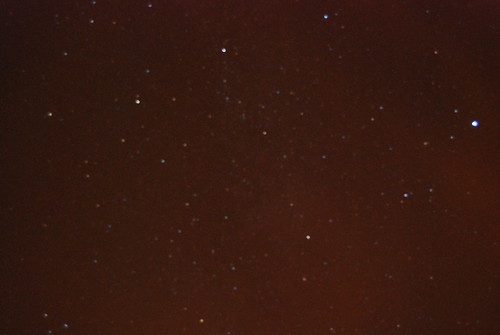
Being, as I am, interested in both photography and astronomy it's a wonder that it's taken me so long to get around to mixing the two up. I've been stopped so far by a feeling that it would be hard. And I was right. I started off fiddling with different settings- I kept the aperture wide open and the D60's stock lens zoomed out, and experimented with different ISOs and shutter speeds. I found that I'd have to use longer shutter times than are catered for automatically if I wanted to use the lower ISOs.


different
I might experiment with star trail pics at some point, but I was trying just to get a half decent shot of the sky at this point. I found I needed a higher ISO to keep shutter times down to a point at which I wouldn't have to worry about star trails.


Another problem I had was focusing: the camera wouldn't autofocus on the sky (which didn't surprise me), but manually focusing was difficult because I couldn't see well enough through the eyepiece.

settings.
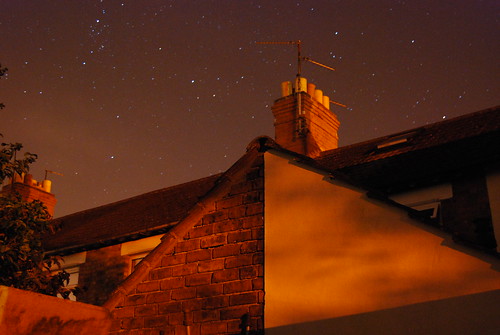
After a while I had the bright idea of auto-focusing on something closer and seeing what happened there. So I did.


And then it hit me: I could auto-focus on the house and then point at the sky without refocusing:


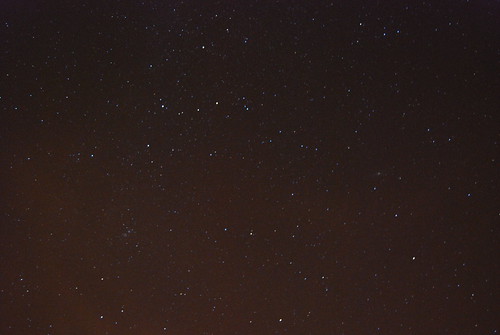
Which isn't a bad nonspecific starfield, I think, for a first night's shooting.

Any tips would be most welcome.

Here are my thoughts for the future:

  • Give my remote shutter release a whirl.
  • Try to get shots of some recognisable constellations.
  • Photograph the ISS.
  • Try a low ISO, extra-long exposure wide-angle shot to get some star trails.

Popular Posts

My Blog List

Blog Archive

Creative Commons Licencing Information

Tom⇒maths by T. Briggs is licensed under CC BY-NC-SA 4.0 by-nc-sa